

Texas Farm Bureau secures policy resolutions at American Farm Bureau Federation meeting
(Anaheim, California)—Texas Farm Bureau (TFB) voting delegates successfully promoted Texas policy language on New World screwworms, water and a wide range of other national topics as new policy positions of the American Farm Bureau Federation (AFBF) at the AFBF 107th annual meeting in Anaheim Jan. 13.
TFB was represented at the AFBF business session by 25 voting delegates, the third-largest delegation among the 50 state Farm Bureaus and Puerto Rico. There was a total of 330 AFBF voting delegates.
“We had a great day at the annual meeting. These resolutions start at the county Farm Bureau level in Texas and across the country,” TFB President Russell Boening said. “It’s a grassroots effort of the entire organization and a representation of every aspect of agriculture in our nation. The national policies adopted represent a roadmap that ensures we’re all on the same page for the year ahead.”
Delegates approved a new national policy section on New World screwworm.
Included in the new section was a Texas resolution supporting federal funding for the construction of new, state-of-the art, biocontainment animal disease and parasite research facilities. Such facilities will be for federal research studies on domestic and foreign endemic and non-endemic animal diseases and parasites of livestock and wildlife. The resolution also supports increased federal funding for such research and the operation of the new facilities and the continued operation of such facilities even after the threat has been removed.
Delegates approved language from Texas that adequate USDA animal health facilities are critical to maintaining the United States’ world-class research on both foreign and domestic diseases and parasites. Delegates said the U.S. should use every means necessary to ensure these diseases and parasites do not reach or return to U.S. soil.
Delegates approved language that if USDA funds are unavailable, the organization supports a collaborative effort among agriculture and wildlife stakeholders and state agency resources to fund a national animal disease and parasite surveillance or eradication program that is subject to producer and industry oversight.
Delegates supported a resolution opposing the reopening of the U.S.-Mexico border to cattle trade until the New World screwworm is controlled in Mexico, as determined by the U.S. Secretary of Agriculture.
In addition, delegates approved language from Texas that supports the proper disposal of deer, elk and other wildlife due to chronic wasting disease and New World screwworm on federal land being the responsibility of the U.S. Fish and Wildlife Service.
Regarding cotton, AFBF delegates approved a Texas resolution supporting efforts to educate the public regarding the benefits of natural plant fibers. Delegates also adopted a Texas resolution supporting the development of a cotton harvest incentive endorsement for crop insurance policies.
Delegates discussed water issues of concern. Delegates adopted language from Texas supporting the inclusion of enforceable provisions and remedies within the U.S.-Mexica-Canada Trade Agreement, or future trade agreements between the U.S. and Mexico and/or Canada, for non-compliance with water treaties in relation to Rio Grande River flows into the United States or compacts that disproportionately impact the regional production and/or commerce of a partner country.
Delegates adopted a Texas resolution supporting the National Scrapie Eradication Program being modified to emphasize voluntary participation and tagging for the movement of all classes of sheep and goats by USDA APHIS. Any mandatory animal tagging should be limited to interstate movement of breeding animals that are 18 months of age or older.
Delegates approved a Texas resolution supporting the United States getting out of the United Nations and the United Nations getting out of the United States.
Delegates approved a Texas resolution supporting policy that exempts all nutrient-dense foods from being classified as “ultra processed foods.” Nutrient-dense foods include, but are not limited to, beef, pork, lamb, poultry, dairy products, fruits, vegetables, grains and nuts.
Delegates approved a Texas resolution opposing the use of orbital sunlight redirection technologies, including illumination of land leased for solar energy, without thorough environmental permitting, a lengthy public comment period and the express consent or landowner(s) or other affected parties.
AFBF supports the elimination of diesel exhaust fluid systems and particulate filters on all diesel motors. Delegates approved a Texas resolution supporting the reprogramming and retrofitting of existing engines that are currently in use at the expense of the U.S. Department of Energy and the Environmental Protection Agency.
The 2027 AFBF annual meeting is set for Jan. 8-12, 2027, in Charlotte, North Carolina.
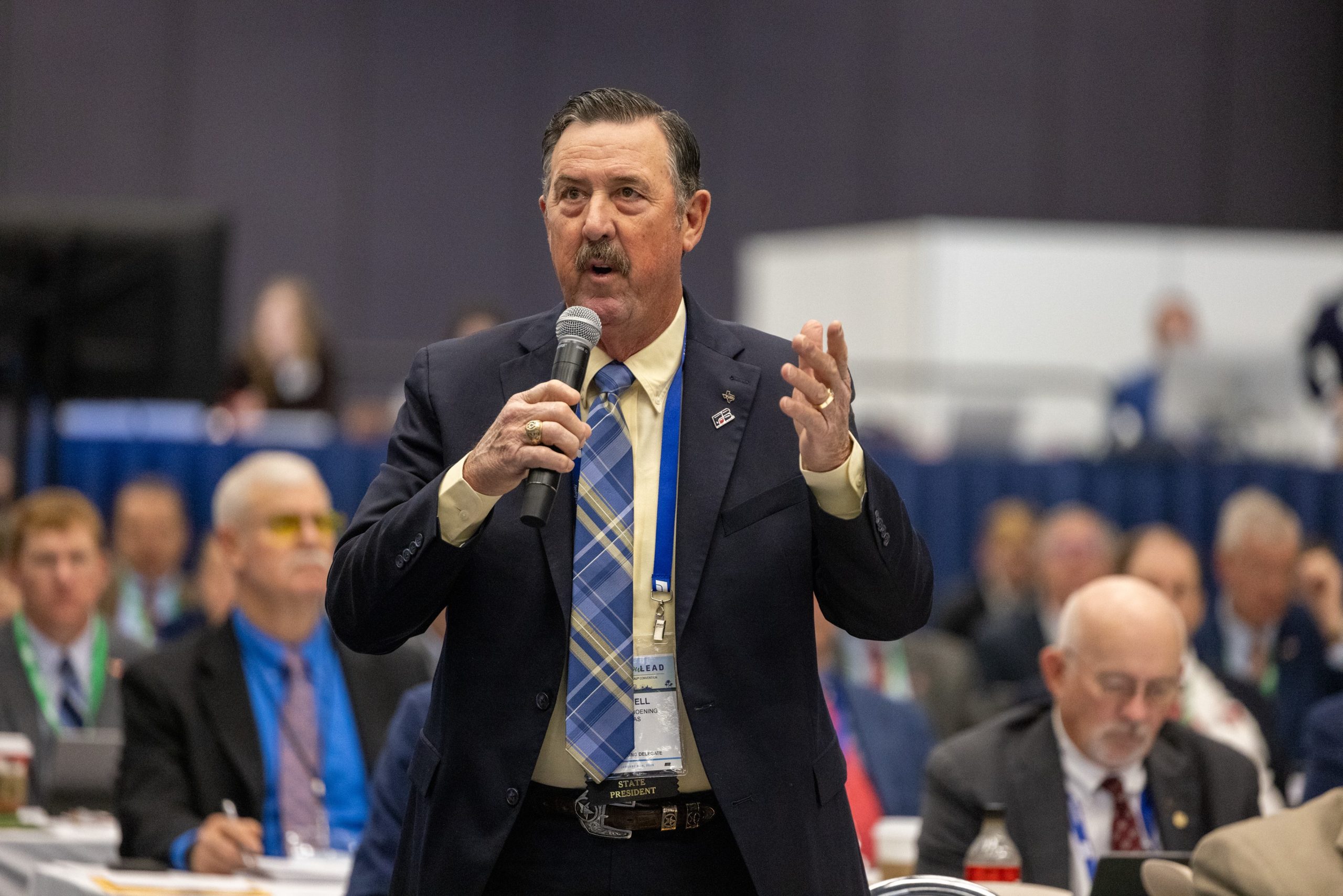
Texas Farm Bureau President Russell Boening speaks in support of a Texas resolution during the American Farm Bureau Federation's annual business meeting in Anaheim, California.
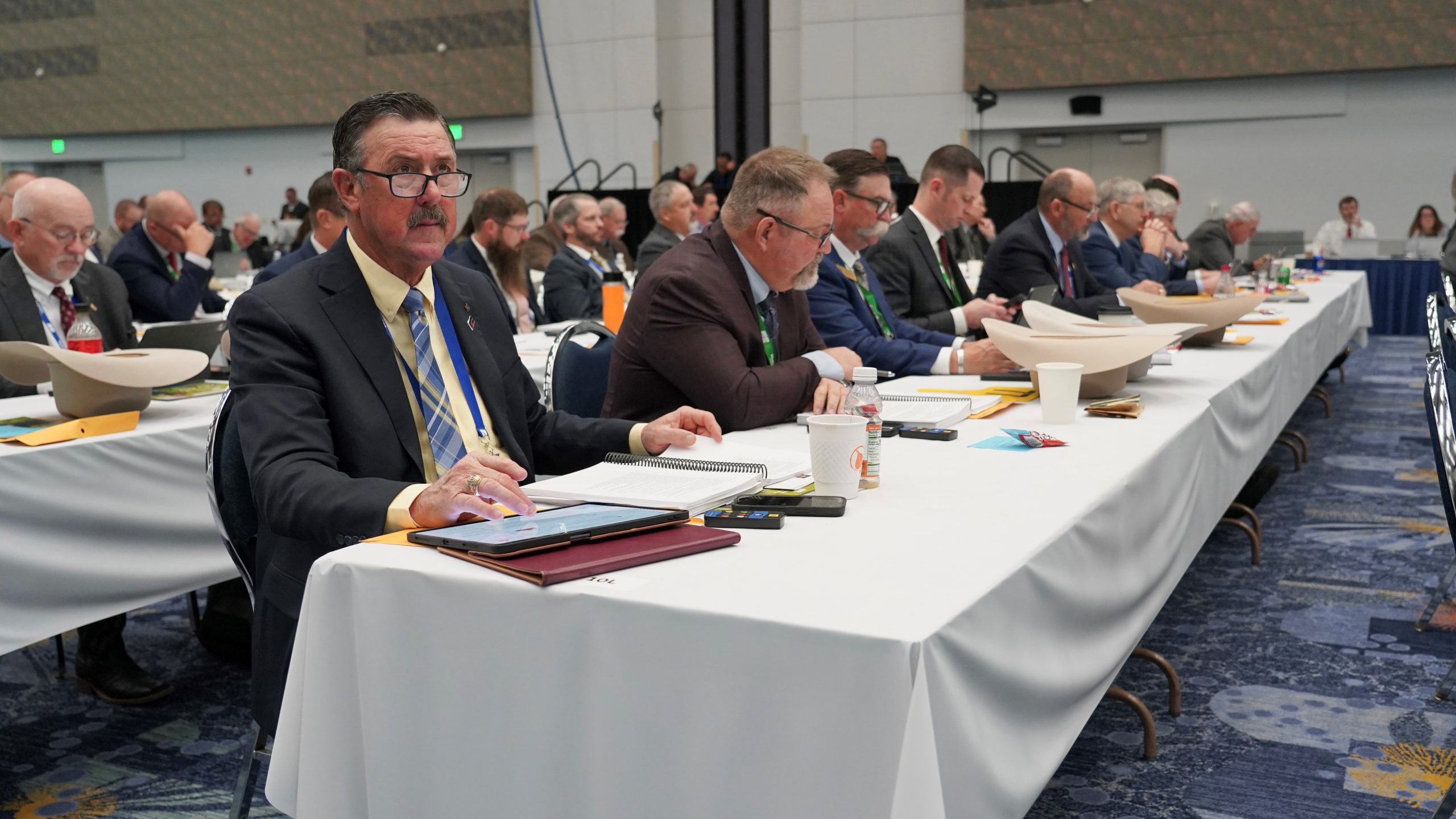
Texas Farm Bureau had 25 voting delegates among the 330 delegates at the AFBF business session in Anaheim, California. Several Texas resolutions were among those passed by the voting delegates.